It's been almost a year since I followed a hint[1] from Iaian McGilchrist to learn more about Max Scheler's ideas on love. How happy I became! I've never found a more potent way of defining love, and over the past nine months or so I've been increasingly impressed with this way of framing love.
Scheler wrote that love is the movement which "brings about the continuous emergence of ever-higher value in the object -- just as if it was streaming out from the object of its own accord, without any sort of exertion...on the part of the lover. ...true love opens our spiritual eyes to ever-higher values in the object loved."[2] There is more to say about this, but this quote captures the essential point.
As I've been infusing this perspective into my worldview, I recently found myself searching for music which captured this idea of love. It's very fertile soil for any lyricist. I was stunned to realize I could not think of a single song which talks about this kind of love. One that comes close would be Steve Winwood's "Higher Love" or perhaps even better, Pete Townshend's "Let My Love Open the Door." I'm sure there are more, perhaps even many more, but this was all I could think of.
I want more. I want lots more. So I think we need a new genre of music oriented around this view of love. We are lovers who seek to make our loved ones more beautiful, and there are joys and sorrows and the whole range of human emotion embedded in that angle. Fertile, fertile soil, where people like Rumi play.
A problem with pointing people toward Scheler
[Update, months later] Uh oh.
Um...
Well... How do I say this?
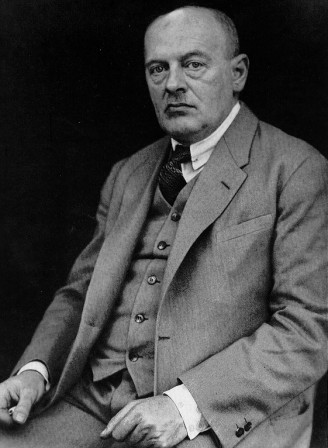
Okay, I just discovered there is a problem with pointing people toward Scheler. It's a problem which explains why someone with such deep insight into love has portraits which show a rather grumpy dude who looks unloved and unloving. The portraits show he had... issues... which seem to contradict such deep insight into love and such a high recommendation from McGilchrist. And now I've discovered why.
This is a problem I've seen before, with another luminary in my pantheon of intellectual heros, Schrodinger. And there are others like this. The best way to confront this problem is with candid honesty, so here goes:
There's a story about Max Scheler, the famous early 20th century Catholic German ethicist. Scheler was known for his inspiring moral and religious reflections. He was also known for his horrible personal behavior, including multiple predatory sexual affairs with students, sufficiently serious that he was banned from teaching in Germany. When a distressed admirer asked about the apparent discrepancy, Scheler was reportedly untroubled, replying, "The sign that points to Boston doesn't have to go there."
The whole article from which this quote is extracted is thoughtful, with lots of comments, so if you're interested in more details, check it out here.
In the world of quantum mechanics, Schrodinger was equally profound and yet had the same kind of issues in his personal life.
Scheler's response is a clever one. I have to say in agreement: there are many great thinkers whose insights transcend their generation, but whose personal life did not embody their own insights. It doesn't always have to mean an unsavory personal life. For example, Alfred Korzybski's great insight ("the map is not the territory") required one to change their language (how we use the word is...[3]) but he himself never did so. He pointed toward Boston but never got there.
Perhaps the only person in history who wasn't this way would be the Son of God, whose words are able to be seen as true because he lived them so holistically. That's Rene Girard's great insight into the Christ: He was a myth who was also real. Apparently, we only need one of those to season the whole pot of porridge.
Don't get me wrong
I must be careful here. I'm not advocating that we ignore a person's character flaws if they present something stunningly beautiful to the world. Nothing of the sort. Rather, I'm saying there's a balance to be sustained here, and rejecting their insight because the vessel which carried it to us is broken, is shooting the messenger and missing the larger point. And Scheler provides a way for us to salvage a messenger's message from his own character flaws.
I seek to hold myself accountable to a standard which unites my deepest philosophical insights into my own day-to-day lifestyle, partly because I believe you can only truly know a philosophical insight or teaching by living it. I have much to say on this point, but that will be for another time and place. Being one who seeks this unification of thought and action deeply, I well know there is a gap between my ideals and my real, and thus have compassion in principle for others with the same dilemma. Thankfully, I do not have the specific issues of Scheler and Schrodinger, but I do have my own flaws, like being too selfish, being too impulsive, not governing my anger well, being too lazy, and other such things; enough to understand gaps.
We still need a genre of music which celebrates Scheler's idea of love, but maybe it doesn't need to be named after him like I was thinking when I wrote the headline. Sigh.
Note(s)
- ^ This is an article I wrote back in April 2025 upon awakening from a dream, which led me to look more into Scheler: How to become a saviour of the world. Please notice the definite article in that headline is "a" not "the".
- ^ Max Scheler, The Nature of Sympathy, trans. Peter Heath (New Haven: Yale University Press, 1954), 57.
- ^ The E-Prime article on Wikipedia points out the following: While teaching at the University of Florida, Alfred Korzybski counseled his students to eliminate the infinitive and verb forms of "to be" from their vocabulary, whereas a second group continued to use "I am," "You are," "They are" statements as usual. For example, instead of saying, "I am depressed," a student was asked to eliminate that emotionally primed verb and to say something else, such as, "I feel depressed when ..." or "I tend to make myself depressed about ..." Korzybski observed improvement "of one full letter grade" by "students who did not generalize by using that infinitive".